
Commercial
Commercial Electrical Maintenance Checklist for GTA Businesses
Keep your GTA business running with this commercial electrical maintenance checklist: thermal imaging, panel inspections, emergency lighting tests and records.
By the Nexline Electrical team Published Updated
Quick answer
A commercial electrical maintenance checklist should cover five tasks: thermal imaging scans of panels and connections; regular inspection of panels, transformers and distribution equipment; testing of emergency lighting, exit signs and backup power; a load capacity review before you add equipment or space; and complete maintenance records. Nexline Electrical builds scheduled maintenance programs for businesses across the GTA.
Commercial electrical systems work harder than residential ones. They carry heavier loads, run longer hours and power equipment your business can’t operate without. Most failures give warning signs first: a connection that runs hot, a breaker that trips at peak load, an emergency light that no longer holds a charge. A planned maintenance routine is how you catch those signs before they become downtime or a safety incident.
Use this checklist to review what your facility already does, and where the gaps are.
Why does commercial electrical maintenance matter?
- Downtime: an unplanned shutdown stops production, sales or service. Repairs planned around your schedule are usually far less disruptive than emergency ones.
- Fire risk: loose, corroded or overloaded connections generate heat, and heat damages equipment over time.
- Compliance: emergency lighting and exit signs have inspection and testing requirements under the Ontario Fire Code, and electrical work must meet the Ontario Electrical Safety Code (OESC).
- Insurance and leases: insurers, landlords and auditors may ask how your electrical systems are maintained.
The CSA Z463 standard, which covers the maintenance of electrical systems, is a useful reference when you set up a program.
What should a commercial electrical maintenance checklist include?
1. Schedule thermal imaging scans
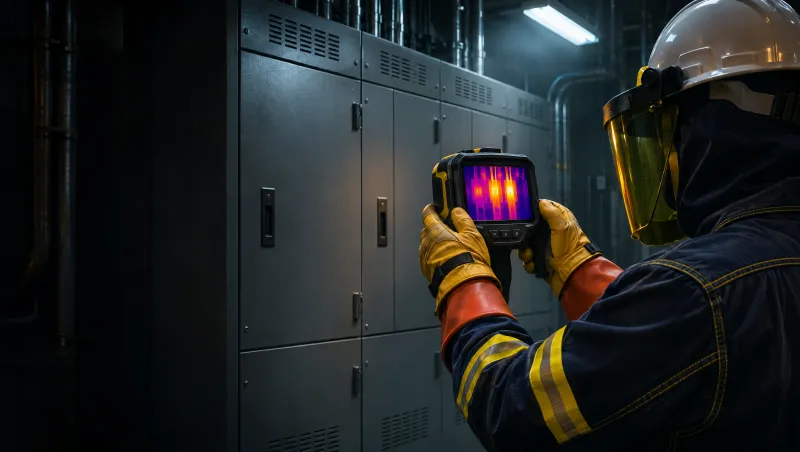
Thermal (infrared) imaging shows heat you can’t see. A scan of your panels, switchgear, disconnects and transformers can reveal loose or corroded connections, overloaded conductors, unbalanced phases and breakers that are starting to fail. Many facilities scan at least once a year, and more often for critical or heavily loaded equipment.
To get a useful scan:
- Scan while equipment is running under normal load, since many problems only show up when current is flowing
- Have covers removed only by qualified electrical workers following safe work practices for energized equipment, such as CSA Z462
- Ask for a written report with images, temperatures and a priority for each finding
- Book repairs for a planned shutdown, then re-scan to confirm the fix
Nexline Electrical offers thermal imaging scans of panels, switchgear and connections as part of its maintenance and repair services, to find hot spots before equipment fails.
2. Inspect panels, transformers and distribution equipment
A thermal scan finds heat. A visual inspection finds almost everything else. Include one in every maintenance visit, and whenever you renovate or add equipment. Look for:
- Discolouration, scorch marks or a burning smell at panels and connections
- Corrosion, moisture or water stains, especially in basements and near loading doors
- Dust and debris inside enclosures and around transformer vents
- Missing covers, open knockouts, or empty breaker spaces without filler plates
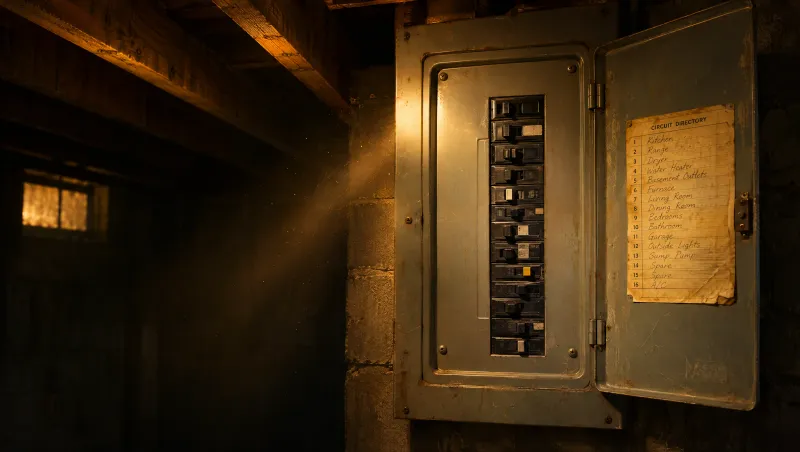
- Panel directories that no longer match what each breaker feeds
- Storage creeping into electrical rooms, since the OESC requires clear working space around electrical equipment
Connections can also be checked and tightened to the manufacturer’s specifications, but only with the equipment shut off during a planned shutdown.
3. Test emergency lighting, exit signs and backup power
Emergency lighting and exit signs are life safety systems, and the Ontario Fire Code sets how they’re inspected and tested. A typical routine includes:
- Confirming exit signs are lit and visible along exit routes
- Testing emergency lighting on battery power, and replacing failed batteries and lamps
- Running standby generators and transfer switches on the schedule set by the manufacturer and applicable standards
- Checking UPS systems that protect servers, point-of-sale terminals or security equipment
- Logging every test with the date, the result and any repair
4. Review load capacity as your business grows
Most businesses add load gradually: a new machine, a walk-in cooler, signage, a server rack, EV chargers for staff, another unit. Each addition can look small, but together they can push panels and feeders past their limits, leading to nuisance trips and premature equipment failure.
Review capacity before you add equipment or space, not after something trips. A capacity review looks at:
- Spare breaker spaces and the rating of each panel and feeder
- Measured loads, ideally recorded over a period of normal operation
- Balance between phases on three-phase systems
- The size of the main service, and what your utility can supply
If you’re running out of room, our power distribution services cover new panels, transformers and service upgrades.
5. Keep maintenance records
Records turn maintenance into a system. They show insurers and landlords that your equipment is looked after, help electricians diagnose faults faster, and let you plan replacements before parts become hard to find. Keep:
- Dated inspection and thermal imaging reports, with the repairs that followed
- Emergency lighting, exit sign and generator test logs
- ESA Certificates of Acceptance for completed electrical work
- Current panel directories and single-line diagrams
- An equipment list with ratings, ages and manufacturer manuals
How do you set a maintenance schedule for your facility?
No single schedule fits every building. The right intervals depend on how critical the equipment is, the operating environment (dust, moisture, heat and vibration all speed up wear), the age of the system, manufacturer recommendations and your insurer’s requirements. Life safety systems follow the Ontario Fire Code.
A practical program usually comes together in four steps:
- Review the site and build an equipment list.
- Set an interval for each task based on how critical the equipment is and the conditions it runs in.
- Schedule visits, and any shutdowns, around your operating hours.
- Report findings after each visit, ranked by priority, so repairs can be planned and budgeted.
Our electrical maintenance and repair services include scheduled programs built this way for commercial and industrial facilities.
Ready to build a maintenance plan?
Nexline Electrical works with offices, retail stores, restaurants, warehouses and industrial facilities in Toronto and across the GTA. Request a free quote or call (647) 768-6872 to plan a maintenance program around your facility and your operating hours.
Frequently asked questions
What does a thermal imaging scan of electrical equipment show?
A thermal imaging scan shows the heat pattern of panels, switchgear, transformers and connections while they carry load. Hot spots can reveal loose or corroded connections, overloaded conductors, unbalanced phases and failing breakers or fuses, often before there are any other symptoms. The scan doesn't fix anything on its own, so each finding should be ranked by severity and repaired during a planned shutdown.
What electrical maintenance records should a business keep?
Keep dated inspection and thermal imaging reports along with the repairs that followed; test logs for emergency lighting, exit signs and generators; ESA Certificates of Acceptance for completed work; current panel directories and single-line diagrams; and an equipment list with ratings and ages. Together, these records show insurers and landlords how your systems are maintained, and they help an electrician diagnose problems faster.
When should commercial electrical equipment be replaced instead of repaired?
Replacement usually makes sense when parts are obsolete or hard to find, the same equipment keeps failing, it shows heat damage or corrosion, or it no longer has the capacity your operation needs. Equipment that has been flooded or exposed to fire should be assessed by a licensed electrician before it goes back into service. Planning replacements ahead lets you schedule the shutdown instead of reacting to a failure.